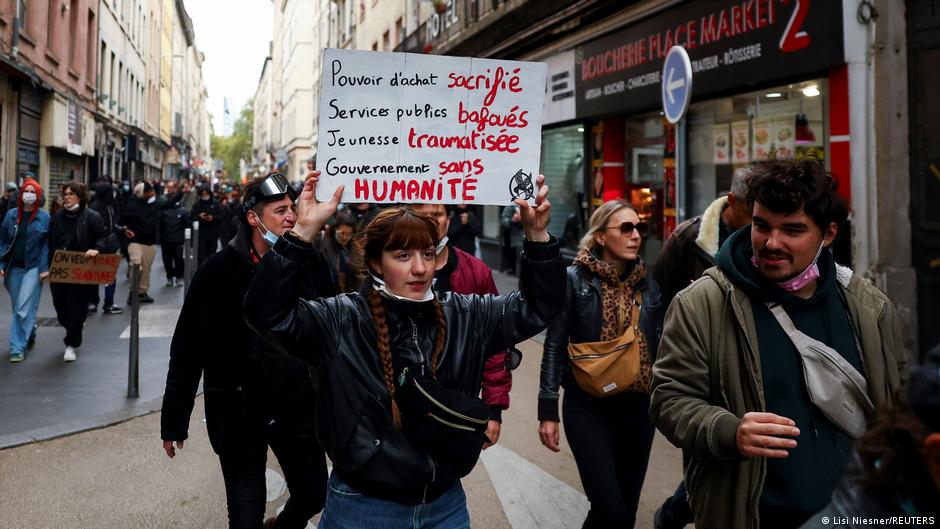
France plans to spend an extra €4 billion on education, according to the source, even as nationwide protests continue and public debt rises. The government intends to provide €4 billion ($4.48 billion) in low-interest loans to renovate schools by 2030, and allocate a further €1 billion to universities by 2029.
The source says France's public debt stands at around 120% of gross domestic product. Germany's debt-to-GDP ratio is roughly 65%, the report says. Germany holds the highest possible AAA credit rating. France is rated AA, A+ or Aa3, depending on the agency, and several agencies have assigned France a negative outlook.
France pays nearly 1.6 percentage points more in interest than Germany on 10-year bonds, the report says. Friedrich Heinemann, an economist at the Leibniz Center for European Economic Research in Mannheim, told DW that this gap, known as the spread, acts as a "fever gauge" for bond markets. He warned that a sharp rise could increase borrowing costs across France and put pressure on banks.
The report estimates France will pay more than €79 billion in interest on its total public debt in 2026. It projects that figure will exceed €91 billion in 2027 and could reach between €125 billion and €132 billion by 2030. The French Treasury agency Agence France Tresor estimates the central government's interest bill alone at €62.6 billion.
According to the report, the far-right National Rally and the far-left La France insoumise are both campaigning on costly promises. Heinemann called these promises "economic fairy tales." Landry Charrier, a researcher at the University of Bonn, said many French people have yet to grasp the seriousness of the situation.