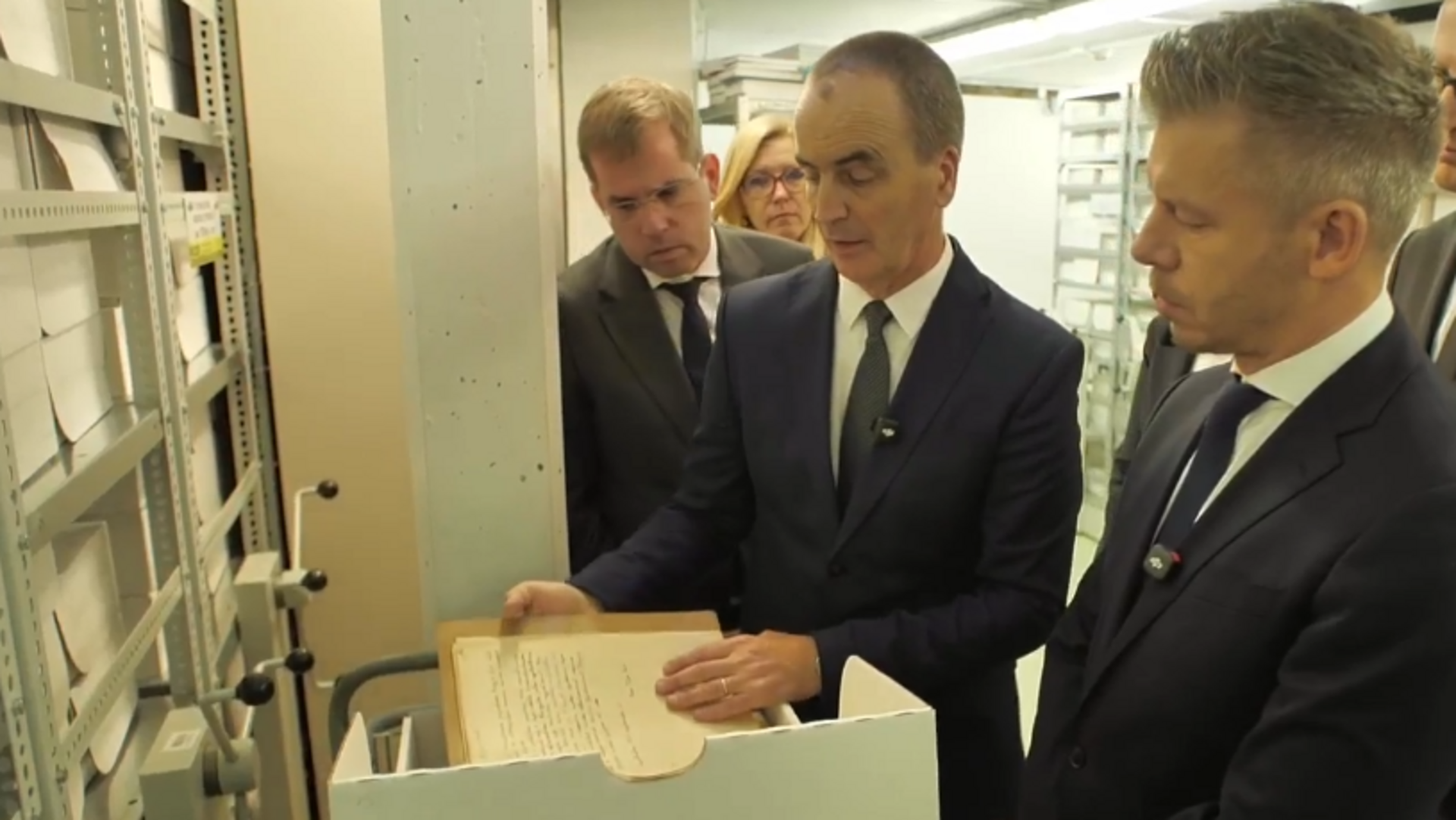
Hungary has opened communist-era secret police files to the public, the government said on Wednesday. Prime Minister Péter Magyar said the release is meant to help Hungarian society come to terms with 45 years of communist rule.
Magyar told reporters at the state archives in Budapest: "I ask everyone to treat this long overdue publication of documents with dignity and humanity." He added: "Many families will now face difficult information, often related to a deceased relative. It is impossible to process a trauma without discussion and asking questions."
The files cover the names and personal data of around 60,000 people recruited by the communist-era secret services. They are available on the nyitottaktak.hu website. The released records include so-called Form 6 cards, which show full details. A typical entry records the informer's real name, codename, date of birth, address, mother's name, motive for recruitment, and the name of their handling officer. Intimate details will be edited out of the current disclosures, according to the report.
A second batch, known as the "B-dossiers," is being digitized and will be released on 25 February. These are described as offering more detail on the recruitment process and the value of the information provided.
The report says an estimated 150,000 to 160,000 people were recruited as informers between December 1944 and February 1990 in Hungary. Many were allegedly blackmailed through threats such as loss of work or study opportunities, loss of access to medicines, or exposure of private information.
Critics say the release comes too late and that the files are incomplete. Zsuzsanna Borvendég, a historian and MEP of the far-right Our Homeland party, said publishing informers' names without full context risks misleading the public. She said that in most surviving agent reports, it is not possible to identify the agent, let alone their motives. Historian Krisztian Ungváry, who has long campaigned for full public access, argues that citizens have a right to know what the state recorded about them and that this access should not depend on those in power.
The report notes that conservative, Socialist-Liberal, and Fidesz-led governments considered opening the files over the past decades but did not do so. Since 1998, people have been able to request their own files and historians have been able to research others, but many names were blacked out and many files were withheld.