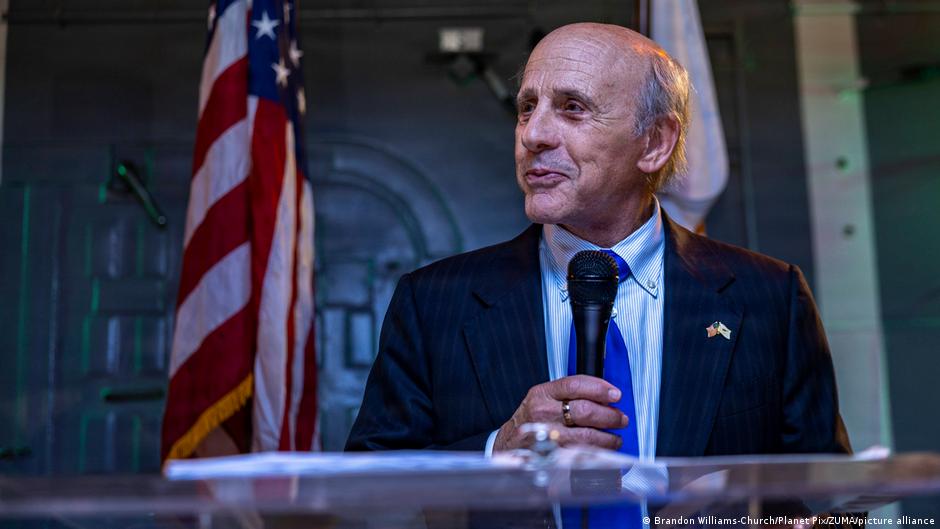
For decades Cyprus balanced carefully between East and West. Its founding leadership joined the Non-Aligned Movement in 1961, and after EU accession in 2004 it kept strong political, economic and military ties with Moscow. The report describes how that balance is now giving way. The new US ambassador, John Breslow, told the Cyprus News Agency on October 4 that Washington plans to upgrade the Andreas Papandreou Air Base in Paphos, send more frequent warship visits and expand joint military activity. His line that "the United States will protect Cyprus in the future" is the most eye-catching remark, and the report itself notes it is not a formal security guarantee.
That caveat matters more than the headline suggests. Nicosia has moved quickly in a direction that many Cypriots once viewed with suspicion, and the report traces the reasons: the 1974 Turkish invasion, the US failure to act decisively against Ankara, the 1987 arms embargo, and the resulting reliance on Russian-made T-80 tanks and Tor-M1 and Buk systems. Adamides argues that Cyprus's stance after Russia's full-scale invasion of Ukraine in February 2022 convinced Washington it could be a reliable partner. The suspension of the embargo in September 2022, renewed until September 30, 2027, is real progress for the National Guard.
Still, a warmer relationship with Washington should not be mistaken for security. The report itself records that Christodoulides said NATO membership is not possible because "the political conditions are not there, taking into account the well-known position of Turkey." An expanded US presence on a divided island, shaped by a conflict that Washington has often treated as secondary to its ties with Ankara, carries its own risks. Cyprus should press for written commitments rather than informal reassurances, and it should be clear with its own public about what any protection would and would not cover.
Cyprus is right to modernize its forces and reduce dependence on Russian hardware, particularly given the sanctions pressure that followed Moscow's war. But the government should avoid trading one patron for another without debate. Parliament and the public deserve a full account of the terms, costs and obligations attached to expanded US access to Paphos and the ports. A strategic realignment of this scale should be made openly, not inferred from an ambassador's interview.