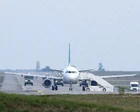
A single morning brought at least 25 reported bomb-threat disruptions to commercial flights across Europe, according to a live report that was last updated at 18:46 CET. The flights named in the report span Ryanair, easyJet, WizzAir, LOT Polish Airlines, Aer Lingus, FinnAir, Aegean Airlines, Iberia, Air Europa, Air Serbia and Sky Express, and they link airports from Dublin and Glasgow to Athens and Bucharest. The scale matters more than any single entry on the list.
Several entries show what these threats cost in practice. EI-DEH, an Aer Lingus flight from Dublin to Rome, was diverted to Evreux, France, and appears three times in the timeline, at 9:55, 10:07 and 10:25. FR1730, a Ryanair flight from London Stansted to Sofia, was diverted to Plovdiv, Bulgaria. W46387, a WizzAir flight from Milan Malpensa to Warsaw, was diverted to Vienna. Two unidentified planes were inspected at Copenhagen airport at 18:16. Each diversion strands passengers, burns fuel and forces crews and airports to improvise, all on the strength of threats the report does not show were credible.
The report also reveals a gap in how these incidents are handled. Flights are repeatedly named with multiple timestamps, including U23179, U25629, FR7326 and GQ750, which were all listed for 11:16 and again for 17:00, and UX1027 and JU102, which each appear twice. That pattern suggests that the same threats or the same aircraft are being tracked over and over, with little evidence in the report of a coordinated system that tells passengers and airlines what has been verified and what has been cleared. The report itself offers no statement from authorities confirming whether any device was found.
Europe needs a common protocol for threat assessment, clear public updates within the hour, and a standard procedure for diverting and re-accommodating passengers across borders. Airlines and airports should not have to reconstruct the day from live blogs. National authorities should explain, in plain terms, what they are investigating and when they expect to know more. Until that happens, a bomb threat will keep working as a cheap way to paralyse a continent's travel network.
Passengers deserve better than a timetable of uncertainty. The people sitting on tarmacs in Evreux or Plovdiv were not the target of any published investigation, yet they paid the price. Governments that treat aviation security as a matter of national pride should recognise that this is now a problem that crosses every frontier the flights do.