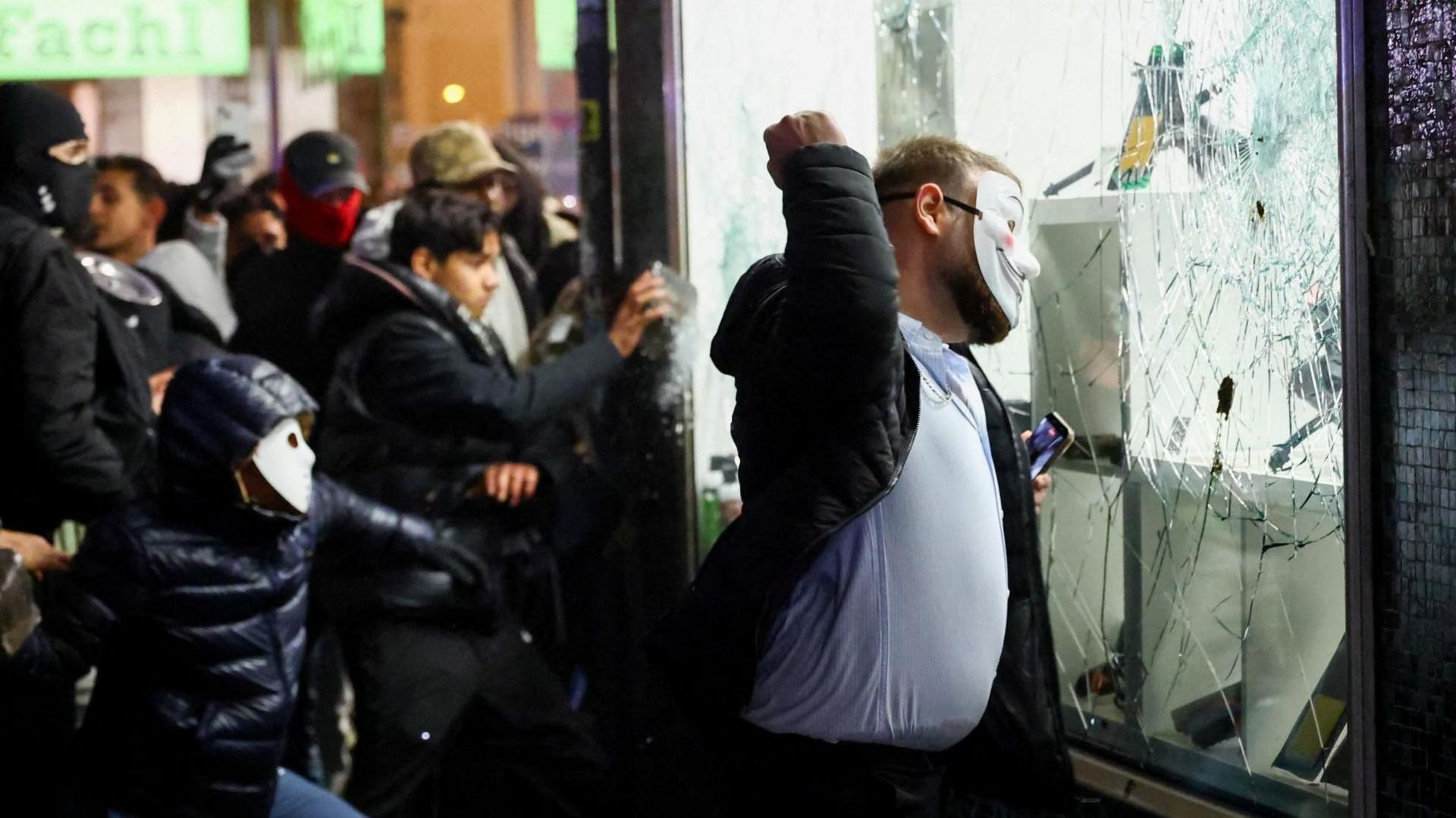
Saturday's demonstrations in Germany began as something the country should take seriously. Thousands joined protests organised by the campaign group Gen Z regelt, which says it is fighting underfunding in schools, the high cost of living, public spending cuts and compulsory military service. Those are real concerns, and the organisers' spokesperson, Lina Friedrich, framed them in terms of better support for health and education systems and a fairer distribution of the burden. Politicians who dismiss young people's economic anxieties as noise are making a mistake.
The night, however, went somewhere else entirely. Police reported violent riots in central Frankfurt, smashed shop windows, molotov cocktails thrown at emergency services, and looting along a main shopping street that police closed off. Clashes were also reported in Berlin, Cologne and Hamburg, where officers used water cannon against protesters who, police said, targeted emergency workers with fireworks, stones and bottles. Looting and attacks on rescuers are not forms of political expression. They harm shopkeepers and the workers trying to keep people safe, and they give cover to the very causes the organisers say they are defending.
Hesse's interior minister, Roman Poseck, said around 100 clearly identified left-wing extremists had infiltrated the Frankfurt protest. That claim deserves scrutiny and public evidence rather than blanket acceptance, but it also points to a real problem: a large, mostly peaceful movement can be hijacked by a small group intent on violence. Organisers who want their message taken seriously have a responsibility to distance themselves from that behaviour clearly and quickly.
The comparison with France is unavoidable, and Poseck's warning that France must not be held up as a model is fair as far as it goes. More than 320,000 people demonstrated there on Saturday, and the parallel youth-led mobilisation suggests a shared frustration across Europe. Yet the lesson is not that German protest should be suppressed. It is that governments must listen to the grievances underneath the anger, particularly over schooling, health care and living costs, before the streets become the only place where young people feel heard.
Police, for their part, should be judged by the same standard. Arrests were made and weapons seized, which is the job of law enforcement. Germany should now prosecute those who attacked emergency workers and looted shops, while also engaging seriously with the organisers' demands. Both things can happen at once, and both are needed.