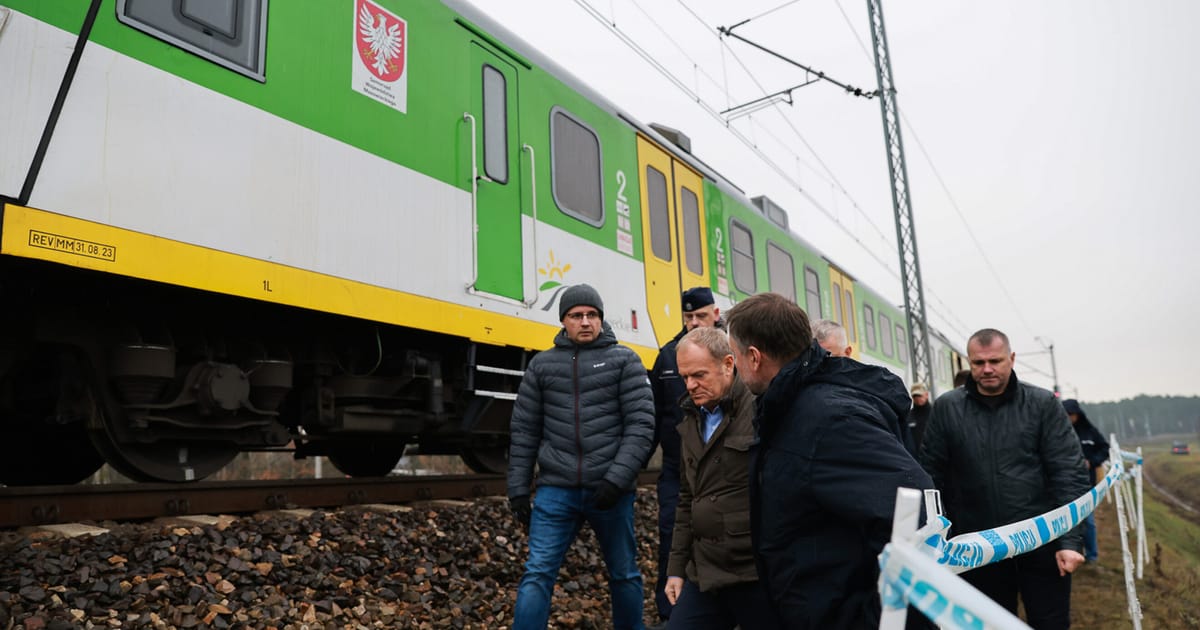
Police in Lower Silesia say a 55-year-old Russian national was charged with espionage after officers patrolling following a football match in Świdnica found him photographing passing trains at an unguarded railway crossing. The regional police authority said the photos could be used against the security of the state, and spokesperson Łukasz Dutkowiak told Radio Wrocław that officers found evidence he had photographed strategic infrastructure systematically, including places and communication facilities beyond Poland. Prosecutors are now investigating activities for foreign intelligence against the Republic of Poland.
The case is important because the context is not hard to read. The report notes that Poland has faced multiple sabotage attacks against its military and railway infrastructure over the past year. Prime Minister Donald Tusk accused Ukrainian nationals of cooperating with Russian services after a November 2025 attack damaged a rail line near the Polish-Ukrainian border. Fires were also reported at a drone-components plant in Skarżysko-Kamienna and an aircraft-parts facility in Lublin in late August, and a Starlink communications station was set on fire near Warsaw in September.
Tusk's own description of the threat is blunt. He said after the September attacks that Russia does not even have to cross the border because it is already waging a hybrid war through drones, sabotage and disinformation. European officials, according to the report, have pointed to an escalation of Russian sabotage over recent months as President Vladimir Putin seeks to disrupt military support for Ukraine. Those are claims by officials and commentators, and the report does not establish who directed this particular suspect.
That distinction matters, and it cuts both ways. The report does not say what the photographs were ultimately used for, whether they reached any foreign service, or whether they linked to the sabotage cases. Taking pictures of trains at an unguarded crossing is not, on its own, proof of a plot. Yet the police account describes a systematic collection effort, and that should be taken seriously by a state that has already seen real damage to its rail and defence sites.
The next step should be a transparent court process that tests the evidence publicly, along with a practical review of how exposed rail crossings and communication facilities are guarded. Poland cannot wall off every kilometre of track, but it can decide which sites matter most and protect them accordingly. The suspect should be presumed innocent until proven guilty, and the government should be careful not to let suspicion of one photographer become a blanket excuse for broader surveillance. Vigilance is warranted; panic is not.