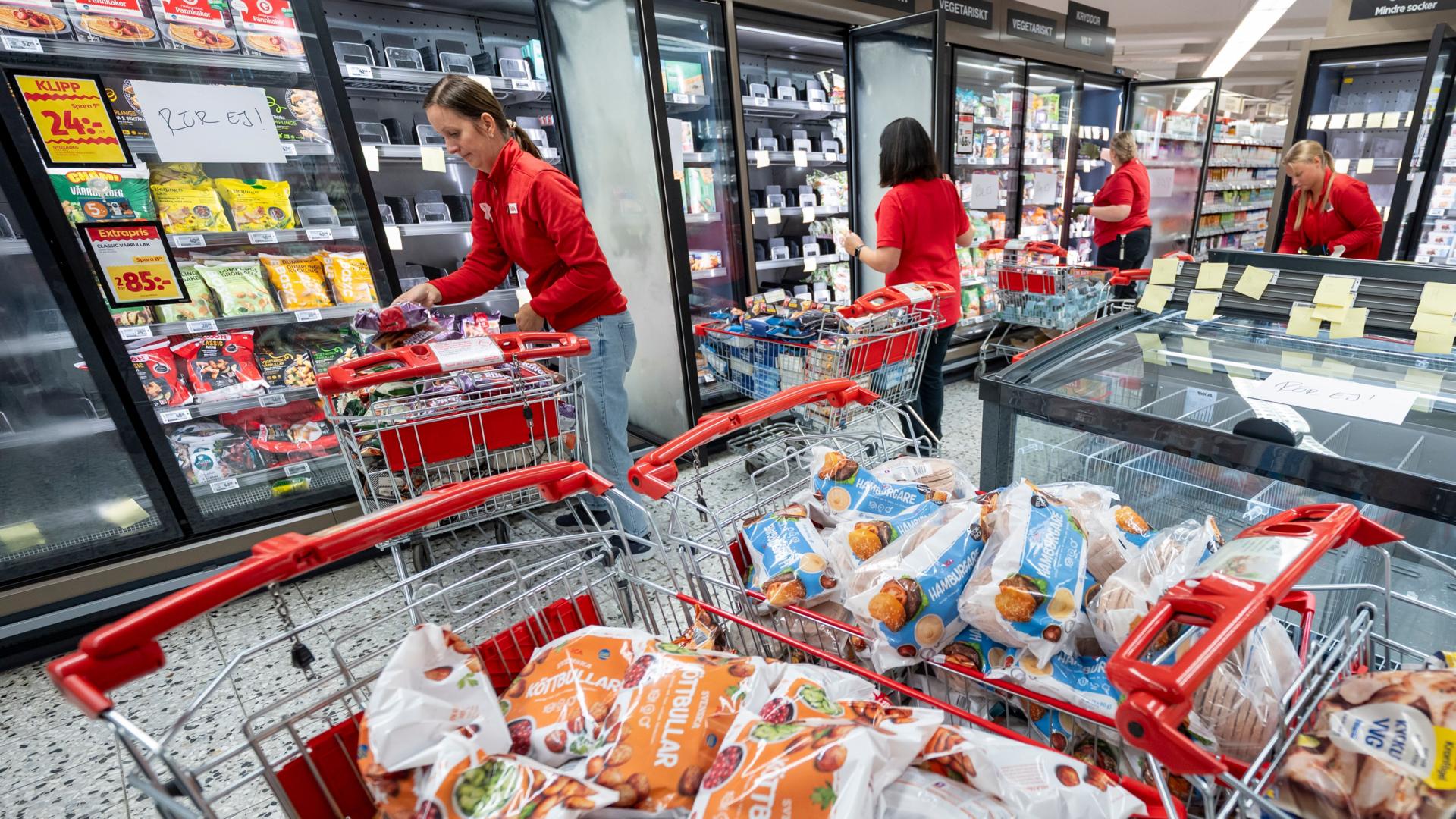
Cyber-attacks hit supermarket chains in at least 10 European countries on Monday, raising refrigeration temperatures high enough to force retailers to discard food. Supermarkets reported problems in Belgium, Estonia, Finland, Ireland, Italy, Luxembourg, the Netherlands, Portugal, Germany and Sweden. Temperatures in some chains reportedly rose as high as 50C (122F).
No one has admitted carrying out the attacks. European Union officials have warned of a deliberate attempt to disrupt the food supply chain. EU food and agriculture commissioner Christophe Hansen said the bloc was taking the incidents "very seriously" and warned of further disruption. Commission spokesman Thomas Regnier did not attribute blame. He said: "These incidents of course show once again how cyber-attacks can disrupt essential services and affect citizens' daily lives."
The attacks follow one about three weeks earlier that disrupted as many as 700 French grocery stores, causing food losses estimated at tens of millions of euros.
In Italy, Prime Minister Giorgia Meloni's government called a meeting with intelligence chiefs. It said the impact was "currently very limited." At least four Co-op supermarkets in Sicily and one business in Tuscany were affected, according to the national cybersecurity agency. Meloni's office said those businesses were "mostly still equipped with obsolete security systems, with interfaces directly exposed to the internet and inadequate authentication mechanisms."
Belgium was among the hardest hit, with dozens of stores reporting refrigeration failures. Federal prosecutors have opened an investigation.
In Ireland, Musgrave Group said 13 SuperValu stores were affected by what it called a cyber-incident. In Germany, disruption at a Rewe Büsken supermarket followed a cyber-attack on system provider Danfoss, the company told the BBC. In Portugal, the Mosqueteiros group said seven Intermarché stores were affected, and that the attack "appears to have targeted an external service provider responsible for managing the refrigeration systems."
Swedish chain ICA reported refrigeration problems at "a limited number" of stores but did not confirm a cyber-attack. In Estonia, public broadcaster ERR reported that hackers raised temperatures in refrigeration units to 50C at at least one supermarket.
In the UK, the National Cyber Security Centre has urged retailers to update the software on fridge temperature controls. Its head, Richard Horne, told BBC Radio 4 that "vulnerable technology has been exploited" in a couple of instances in the UK. He said: "We don't know the full impact."