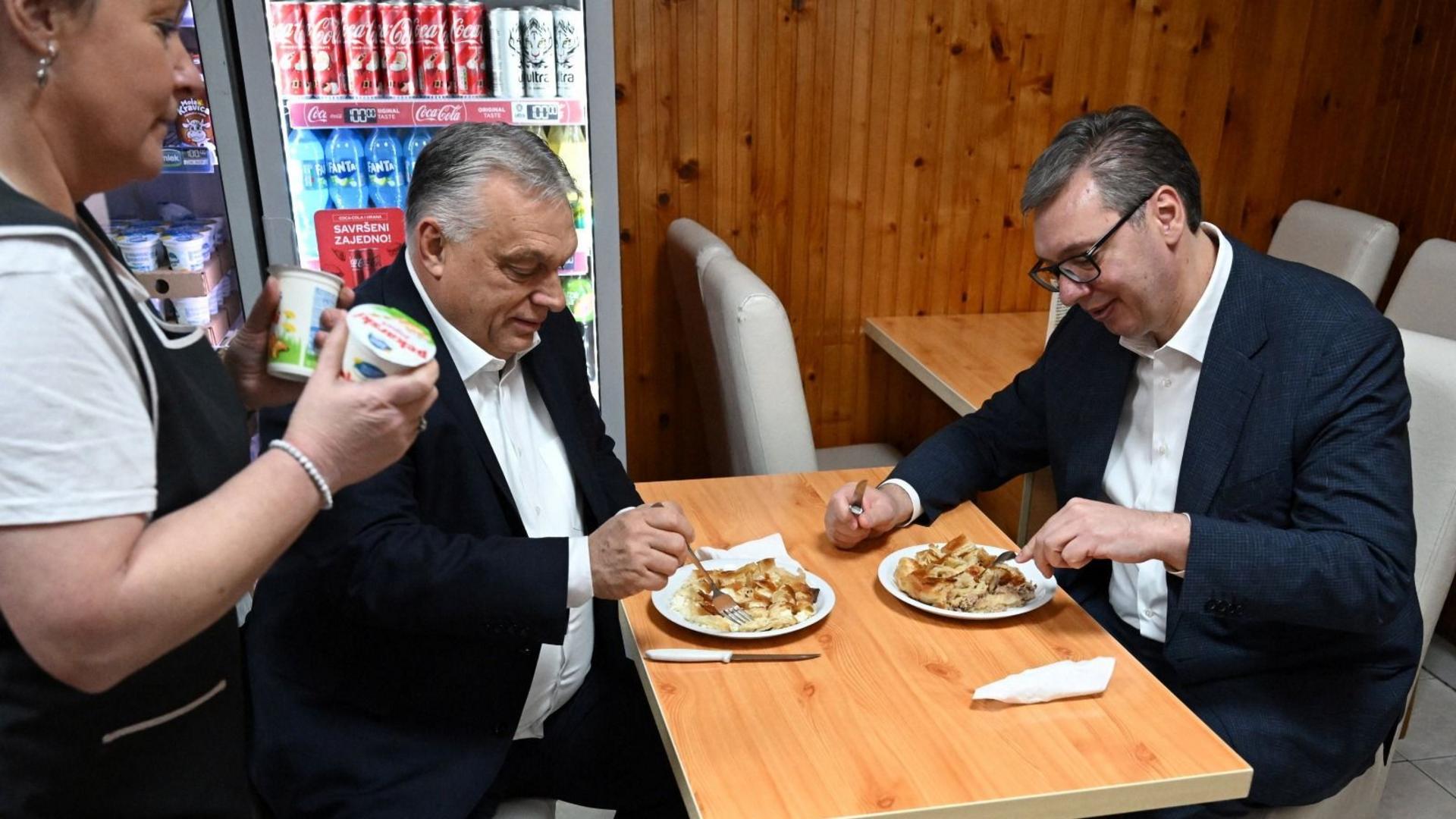
Viktor Orbán and Aleksandar Vučić both lost power within a year of meeting in northern Serbia last November, according to a BBC report. Orbán fell first, in April, after losing to Péter Magyar's Tisza party in Hungary. Last Sunday, a student movement less than two years old won Serbia's parliamentary elections by a landslide.
The report says both opposition victories were driven by high turnout, at 79 percent in Hungary and 69 percent in Serbia, and by young voters who used AI tools to analyze data and organize election monitors. Hungarian activists from the DE civic action group sent 70 monitors to Serbia to work with student representatives in Vojvodina. The BBC reports they had held workshops on their methods during the summer.
A key technique, according to the report, was identifying "infected" polling districts in advance, where high votes for the governing party in past elections suggested intimidation or "chain voting." Péter Klemm, a student activist from Subotica, told the BBC that masked men he described as Vučić supporters gathered near polling stations from about 16:00 on election day. He said mobile teams filmed them, and that volunteers at threatened stations acted as a deterrent.
The report says Vučić conceded at 21:30 on Sunday, the same time of day Orbán conceded on 12 April. It states that there has been speculation that Vučić spoke to Orbán twice that night for advice, and that Orbán urged him not to use force. Vučić denies speaking with Orbán before his announcement but acknowledges a later call. Orbán declined to comment to the BBC.
The Student List won 140 seats in Serbia's 250-seat parliament, the same number Tisza won in Hungary's 199-seat parliament. Magyar called the students directly to congratulate them, according to the report.
The report notes that both men may face prosecution for corruption and abuse of power. It cites Serbia's special prosecution service for organized crime, JTOK, and Hungary's special prosecutors, NVVH, as bodies with similar powers. It also says Hungarian companies close to Orbán were involved in the Novi Sad railway station project, whose canopy collapsed on 1 November 2024, killing 16 people. The BBC describes that collapse as the catalyst for the Serbian student movement.
Áron Timar, founder of the DE civic action group, told the BBC: "In fact they got weaker. And once society found its voice and rose up, there was no way of stopping it."