The European Union's Industrial Accelerator Act (IAA), proposed in March, would subsidize only vehicles produced in Europe, according to DW. The proposal requires that 70% of a vehicle's component value, excluding the battery, be made in Europe. As first proposed, the rules apply only to battery-electric vehicles, plug-in hybrids and fuel-cell models, which made up 27% of new EU car registrations last year.
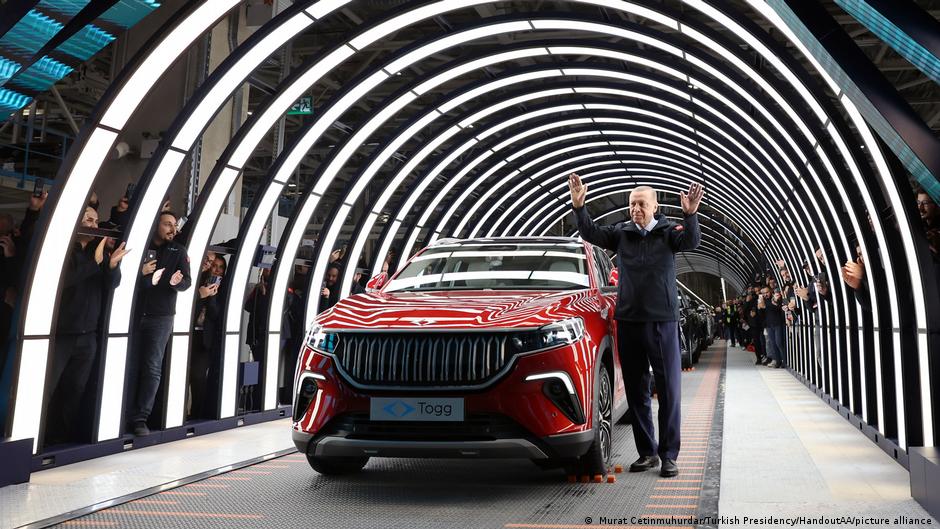
DW reports that the plan worries other allied carmaking nations, including Turkey, Morocco, Japan and South Korea. Germany and France reached a compromise earlier this month. It would let suppliers from non-EU members such as the United Kingdom and Norway qualify for "European origin" status. Turkey is not included.
Ayhan Zeytinoglu, chairman of the Economic Development Foundation (IKV), told DW that 73% of Turkey's total automotive exports go to the EU. "If we encounter a 'Made in Europe' barrier in the EU market, this will cause great damage to our trade with the EU and to our exports," he said. He added that excluding Turkey would also harm European automaking. Turkey's auto exporters association OIB calculated that Turkey's automotive exports to the EU totaled $30.1 billion (€26.8 billion) last year.
Tommaso Pardi, director of the GERPISA research network and a senior researcher at the French National Center for Scientific Research (CNRS), said the 70% target is generous. He estimated that around 83% of parts in an average European-made electric car, excluding the battery, come from Europe.
Under the revised German-French plan, some self-charging hybrids and petrol and diesel vehicles could still be sold after 2035 and would also fall under the rules. DW reports that most of Turkey's nearly 800,000 vehicle exports to the EU last year would fall under this broader scope.
Ankara is lobbying Brussels for inclusion, according to DW. Pardi said automakers are seeking a compromise that would let Turkey join later, but only for European companies based there, excluding recent investments involving Chinese capital.
Benjamin Krieger, Secretary General of the European Association of Automotive Suppliers (CLEPA), told DW that up to 650,000 auto jobs in the region could be lost by 2035 without stronger protection. "A lost industrial job is very hard to win back, and the damage reaches well beyond large suppliers," he said.