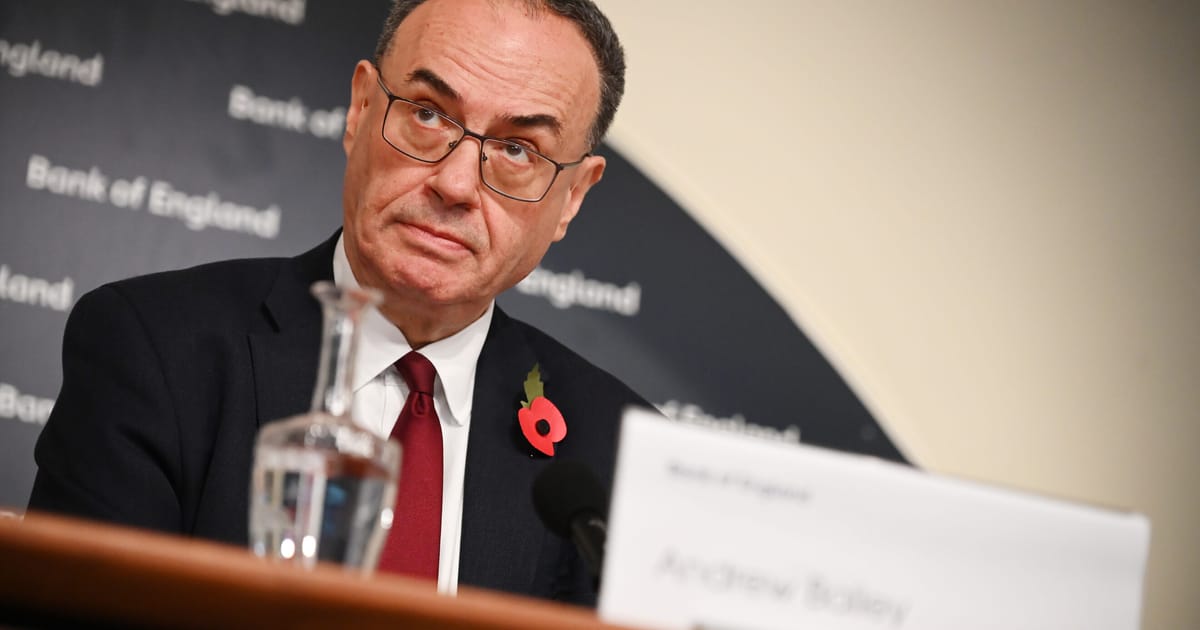
The Bank of England raised its key interest rate to 4% from 3.75% on Thursday, its first increase since August 2023. The Monetary Policy Committee voted 8-to-1 for the move. Catherine Mann dissented in favor of a larger increase of 0.5 percentage points.
The Bank acted after UK inflation reached 3.5% in September, and economic growth came in better than expected. The MPC said the energy shock since the war in Iran began had built "sufficient" inflation pressures to justify a hike.
Governor Andrew Bailey said the increase "shouldn't be seen as the first in an inevitable long sequence of hikes." He added that, "unless the conflict in the Middle East is resolved, neither does it seem likely to be the last increase."
The Bank projected inflation would rise to nearly 5% by the second quarter of 2027. Under an adverse scenario, where prices stay high and the Middle East conflict continues, inflation would reach 6.2% in the third quarter of 2027. The Bank also pushed back on market expectations that rates could rise to 4.75% or 5% in 2027.
POLITICO reports that the decision comes after Republican losses in the US midterm elections. It says a thaw in the conflict could lower fuel prices, and that Trump appeared on Wednesday to accept that higher petrol prices had hurt his popularity. Oil prices fell sharply that day. The source also reports that the Bank expects the energy price cap to reach £2,150 in the first quarter of 2027, and that food price increases could hit 4.75% by mid-2027.